Oral Vitamins vs. IV Vitamin Therapy: Is Your Body Absorbing the Nutrients It Needs?
Oral Vitamins vs. IV Vitamin Therapy: Is Your Body Absorbing the Nutrients It Needs?
Understanding the Difference Between Oral Supplements and IV Nutrient Therapy
Are you taking vitamins every day but wondering whether your body is actually absorbing them?
Many people invest in oral vitamins, minerals, and nutritional supplements to support their health. However, what many don’t realize is that swallowing a supplement doesn’t necessarily mean your body absorbs the entire dose.
For individuals living with digestive disorders, gastrointestinal conditions, or nutrient malabsorption, getting adequate vitamins and minerals can be particularly challenging.
This is where understanding the difference between oral vitamin absorption and intravenous (IV) nutrient therapy becomes important.
At Nutrient Drip, we provide nurse-led, physician-directed IV therapy throughout Red Deer and Central Alberta. Our approach focuses on individualized care, medical screening, and helping clients understand their nutritional wellness options.
Let’s explore how nutrient absorption works and why the method of administration matters.
How Does Your Body Absorb Oral Vitamins and Supplements?
When you take an oral vitamin or nutritional supplement, it must travel through your digestive system before its nutrients can enter your bloodstream.
The process involves several steps:
- Digestion: Your stomach and digestive enzymes help break down food and certain supplements.
- Intestinal absorption: Nutrients are absorbed primarily through the small intestine.
- Transport: Absorbed nutrients travel through the bloodstream or lymphatic system.
- Distribution: Your body transports nutrients to tissues where they may be used, stored, or eliminated.
This process works well for most healthy individuals.
However, nutrient absorption varies depending on the specific vitamin or mineral, its chemical form, the dose taken, food intake, medications, and the health of your digestive system.
For example, vitamin B12 requires specialized mechanisms for absorption, while fat-soluble vitamins such as A, D, E, and K depend partly on normal fat digestion.
The important takeaway?
Taking a vitamin and absorbing a vitamin are not necessarily the same thing.
Reference: Merck Manual, Overview of Malabsorption; National Institutes of Health, Vitamin B12 Fact Sheet.
What Happens When Your Body Struggles to Absorb Nutrients?
Nutrient malabsorption occurs when the digestive system cannot adequately absorb certain vitamins, minerals, fats, proteins, or other nutrients.
Some individuals may consume a balanced diet and take supplements regularly yet still develop nutritional deficiencies.
Medical Conditions That May Affect Nutrient Absorption
1. Crohn’s Disease
Crohn’s disease can cause inflammation and damage throughout the gastrointestinal tract. When the small intestine is affected, absorption of nutrients such as vitamin B12 may be impaired.
2. Celiac Disease
Individuals with celiac disease experience an immune reaction to gluten that can damage the lining of the small intestine.
This damage may interfere with the absorption of iron, folate, calcium, vitamin D, and other essential nutrients.
3. Irritable Bowel Syndrome (IBS)
Unlike inflammatory bowel diseases, IBS does not typically cause intestinal damage or nutrient malabsorption.
However, restrictive diets, persistent gastrointestinal symptoms, or coexisting medical conditions may contribute to nutritional concerns that warrant investigation.
4. Gastric Bypass and Bariatric Surgery
Certain weight-loss surgeries change how food moves through the digestive system or reduce the surface area available for nutrient absorption.
These changes can increase the risk of deficiencies in vitamin B12, iron, calcium, and other nutrients.
5. Pernicious Anemia
Pernicious anemia is an autoimmune condition that interferes with the production of intrinsic factor, a protein necessary for normal vitamin B12 absorption.
For some individuals, injectable vitamin B12 is an important treatment option because it bypasses the digestive system.
6. Chronic Digestive Disorders
Other conditions, including pancreatic insufficiency, short bowel syndrome, and certain intestinal diseases, can interfere with nutrient digestion and absorption.
For individuals experiencing these conditions, standard oral supplementation may not always be sufficient.
References: Merck Manual, Overview of Malabsorption; NIH Office of Dietary Supplements, Vitamin B12.
Oral Vitamins vs. IV Vitamin Therapy: What’s the Difference?
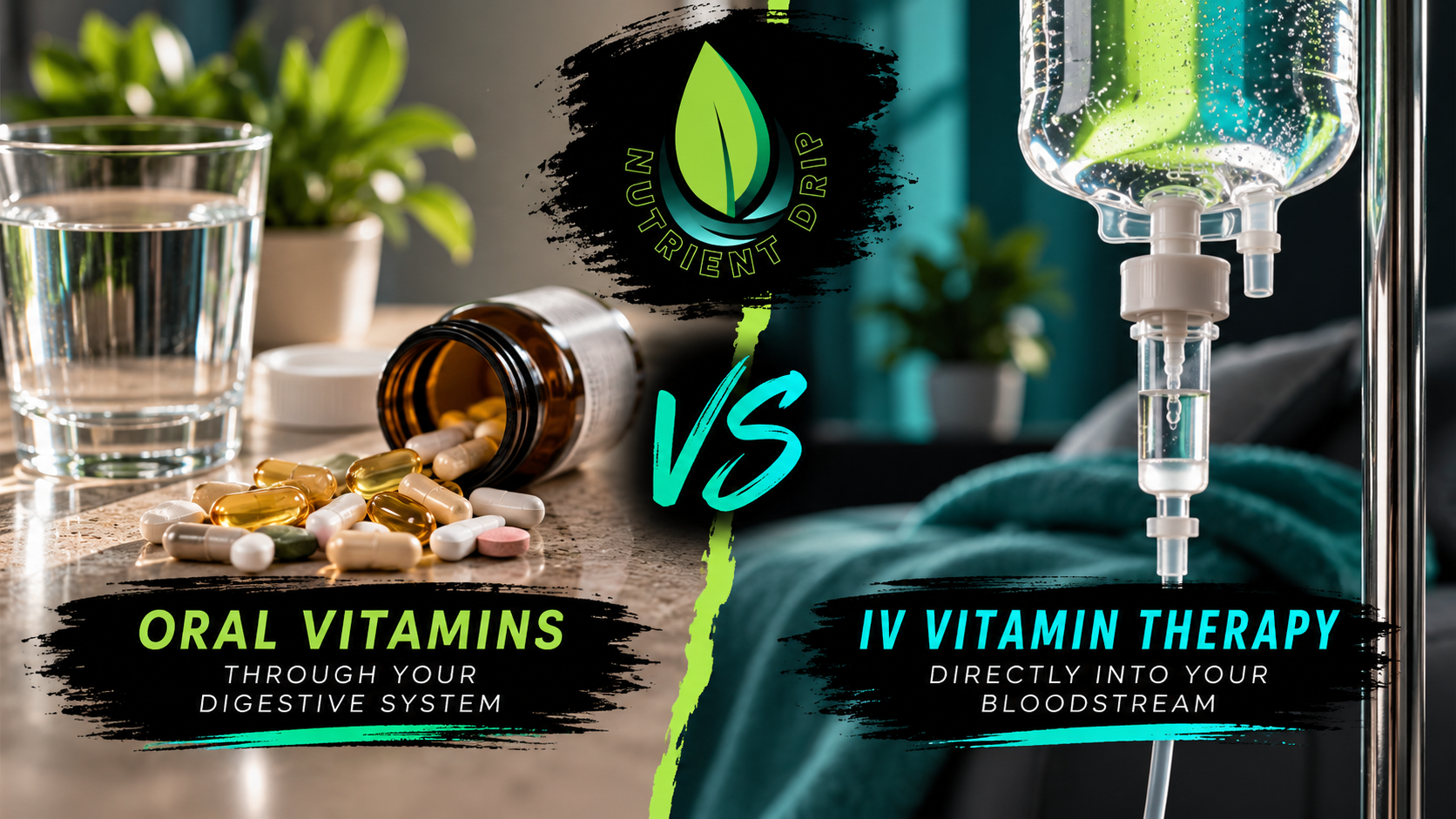
One of the most significant differences between oral supplementation and intravenous vitamin therapy is how nutrients enter the bloodstream.
Oral Vitamin Supplementation
When vitamins are taken orally, they must pass through the gastrointestinal tract before being absorbed.
The percentage absorbed depends on the nutrient, dosage, formulation, and individual’s digestive health.
Some nutrients are absorbed efficiently, while others have more limited absorption.
For example, the National Institutes of Health reports that vitamin B12 absorption decreases proportionally as oral doses increase.
At a 500 mcg oral dose, approximately 2% of vitamin B12 may be absorbed.
Intravenous (IV) Nutrient Therapy
With IV vitamin therapy, nutrients are administered directly into the bloodstream through an intravenous catheter.
This bypasses the gastrointestinal absorption process entirely.
Unlike oral supplements, IV-administered nutrients do not depend on intestinal absorption to enter circulation.
This can be clinically valuable when a person has a significant nutrient deficiency, cannot tolerate oral treatment, or has a medical condition that interferes with gastrointestinal absorption.
However, delivering a nutrient directly into the bloodstream does not automatically mean the body will retain or use all of it.
The kidneys, liver, and other tissues continue to regulate nutrient distribution, metabolism, storage, and elimination.
IV therapy provides direct bloodstream delivery, but whether it offers a clinical advantage depends on the individual’s medical needs and the nutrients being administered.
Why IV Nutrient Therapy May Be Considered for Individuals With Malabsorption
For individuals with certain medical conditions, oral supplementation may not adequately correct a nutritional deficiency.
In these situations, healthcare providers may consider alternative methods of nutrient administration.
1. Bypasses Gastrointestinal Absorption
IV nutrient therapy delivers nutrients directly into circulation without requiring absorption through the stomach or intestines.
This may be particularly relevant for individuals with significant gastrointestinal absorption problems.
2. Provides an Alternative When Oral Supplements Are Not Tolerated
Some individuals experience nausea, abdominal discomfort, constipation, or other gastrointestinal side effects from certain oral supplements.
When oral treatment is poorly tolerated or ineffective, a healthcare provider may recommend another route of administration.
3. Allows Medically Supervised Nutrient Administration
IV therapy allows healthcare professionals to administer specific nutrients and fluids under medical direction.
The type of nutrient, dose, infusion rate, and monitoring requirements should be determined according to individual medical needs.
4. May Help Address Certain Documented Deficiencies
Intravenous nutrient administration has established medical applications, particularly in individuals with severe deficiencies, significant malabsorption, or specific medical conditions.
However, not every nutrient deficiency requires IV therapy.
Oral supplements, dietary changes, and intramuscular injections may be equally appropriate or preferable depending on the situation.
Reference: Canadian Agency for Drugs and Technologies in Health, Intravenous Multivitamin Therapy Use in Hospital or Outpatient Settings.
What About Vitamin B12, Vitamin C, Magnesium, and Other Nutrients?
Different vitamins and minerals have different absorption mechanisms.
Understanding these differences helps explain why nutritional treatment should be individualized.
Vitamin B12
Vitamin B12 plays an essential role in red blood cell formation, neurological function, and DNA synthesis.
Individuals with pernicious anemia, certain gastrointestinal conditions, or a history of bariatric surgery may experience difficulty absorbing vitamin B12.
For some individuals with B12 deficiency, intramuscular injections are recommended.
However, high-dose oral B12 can also be effective in certain circumstances.
Vitamin C
Vitamin C is a water-soluble vitamin involved in collagen production, antioxidant activity, and normal immune function.
Oral vitamin C absorption is dose-dependent, with the proportion absorbed generally decreasing at higher doses.
Intravenous vitamin C bypasses intestinal absorption and can produce substantially higher blood concentrations than oral supplementation.
However, higher blood concentrations do not necessarily translate into better health outcomes for otherwise healthy individuals.
Magnesium
Magnesium contributes to normal muscle function, nerve signaling, and numerous biochemical processes.
Magnesium absorption occurs primarily through the intestines and can vary depending on the formulation and gastrointestinal health.
IV magnesium has established medical uses, including treatment of certain significant deficiencies.
B Vitamins
B vitamins support normal energy metabolism, nervous system function, and other essential physiological processes.
Certain gastrointestinal conditions, medications, and surgical procedures can affect the absorption of specific B vitamins.
The appropriate route of supplementation depends on the particular deficiency and its underlying cause.
Is IV Vitamin Therapy Better Than Oral Supplements?
This is one of the most common questions surrounding IV vitamin therapy.
The answer depends on the individual.
For most healthy people with normal digestion and adequate dietary intake, oral vitamins and a balanced diet are generally sufficient.
IV therapy is not automatically superior simply because nutrients enter the bloodstream directly.
However, for individuals with certain medical conditions, significant malabsorption, or deficiencies that cannot be adequately managed through oral supplementation, intravenous treatment may be clinically appropriate.
Research supports IV nutrient administration for specific medical indications, but there is currently limited high-quality evidence that routine high-dose IV vitamin infusions improve general wellness outcomes in otherwise healthy individuals.
The goal should always be appropriate nutrient replacement and individualized medical care rather than simply achieving the highest possible vitamin concentration.
IV Vitamin Therapy in Red Deer and Central Alberta
At Nutrient Drip, we believe that wellness care should be individualized.
Our nurse-led, physician-directed IV therapy services begin with a health history review and assessment of your individual wellness goals.
We offer a range of IV nutrient therapy and hydration services, with treatment suitability determined through medical screening.
For individuals concerned about nutrient deficiencies or absorption problems, we encourage appropriate medical evaluation and laboratory testing to help identify the underlying cause.
Mobile IV Therapy: Wellness Care That Comes to You
One of the unique benefits of Nutrient Drip is the convenience of our mobile IV therapy services.
We provide mobile IV therapy throughout Central Alberta, including:
- Red Deer
- Sylvan Lake
- Innisfail
- Olds
- Ponoka
- Rocky Mountain House
- Surrounding Central Alberta communities
Whether you prefer an appointment in the comfort of your own home or a relaxing private clinic environment, Nutrient Drip offers options designed around your needs.
All treatments are subject to medical assessment and suitability.
Your Body Deserves an Individualized Approach to Nutrient Health
If you are taking vitamins regularly but continue to experience symptoms that concern you, it may be worth discussing nutrient absorption and possible deficiencies with your healthcare provider.
Conditions affecting the gastrointestinal system can sometimes make it difficult for the body to absorb essential nutrients.
Understanding whether your body is receiving adequate nutrition is an important part of maintaining your health.
At Nutrient Drip, we’re here to help you explore your IV therapy options through professional, nurse-led, physician-directed care.
Interested in Learning More About IV Vitamin Therapy?
Book your complimentary consultation with Nutrient Drip to discuss your wellness goals, health history, and whether IV nutrient therapy may be appropriate for you.
Nutrient Drip | Mobile Premium IV Therapy
Physician Directed. Nurse Led.
Serving Red Deer, Sylvan Lake, Innisfail, Olds, Ponoka, Rocky Mountain House, and surrounding Central Alberta communities.
Visit nutrientdrip.ca to learn more or book your complimentary consultation.
Medical Disclaimer: IV nutrient therapy is not a substitute for a balanced diet, appropriate medical investigation, or treatment of underlying health conditions. IV administration carries risks, including infection, vein irritation, fluid overload, and adverse reactions. Treatment suitability is determined through individual medical screening and physician-directed protocols.
References
References for Your Blog
These are credible sources you can include at the bottom of your website article. I’ve prioritized medical publications, the National Institutes of Health, and Canadian healthcare research.
1. National Institutes of Health — Vitamin B12: Health Professional Fact Sheet
Explains how vitamin B12 is absorbed, why certain gastrointestinal conditions cause deficiencies, and when injectable B12 may be appropriate.
NIH Vitamin B12 — Health Professional Fact Sheet
2. Merck Manual — Overview of Malabsorption
Explains how nutrients are absorbed through the digestive system and how conditions such as Crohn’s disease, celiac disease, and intestinal disorders interfere with absorption.
Merck Manual — Overview of Malabsorption
3. Canadian Agency for Drugs and Technologies in Health (CADTH) — Intravenous Multivitamin Therapy
Canadian evidence review examining IV vitamin therapy, its clinical applications, and the available evidence regarding effectiveness.
CADTH — Intravenous Multivitamin Therapy Review
4. Drug and Therapeutics Bulletin (2023) — Intravenous Vitamin Injections: Where Is the Evidence?
Peer-reviewed publication examining the scientific evidence supporting IV vitamin administration, including its established medical uses and limitations in general wellness settings.
Intravenous Vitamin Injections — Research Article
5. To IV or Not to IV: The Science Behind Intravenous Vitamin Therapy (2025)
Scientific review discussing IV vitamin therapy, clinical applications, safety considerations, and limitations in the available research.